It can be developed much earlier through tertiary education. By incorporating Quality, Environmental, Health and Safety (QEHS) principles into both laboratory learning and hospitality/event project training, educational institutions can prepare students to recognize hazards, follow controlled procedures, and take responsibility for how their work affects people, results, and the environment.

Turning Laboratory and Hospitality Learning into Safe Work Habits
Students should learn more than how to conduct experiments, operate equipment, or set up event booths. They also need to understand risk assessment, good practices (whether in the lab or on-site), documentation control, hazard management, emergency response, and responsible waste or resource disposal.
Introducing these practices during their education helps students develop safe and disciplined habits that can be carried into:
Commercial, medical, testing, research, pharmaceutical, and industrial laboratories.
Hospitality, events, MICE, exhibitions, stage production, and venue operations.
In laboratories, this might mean safe chemical handling, equipment lockout/tagout, and proper waste segregation. In hospitality and event projects, it might mean safe rigging and staging, crowd management, food safety controls, electrical safety for temporary installations, and clear emergency evacuation plans.
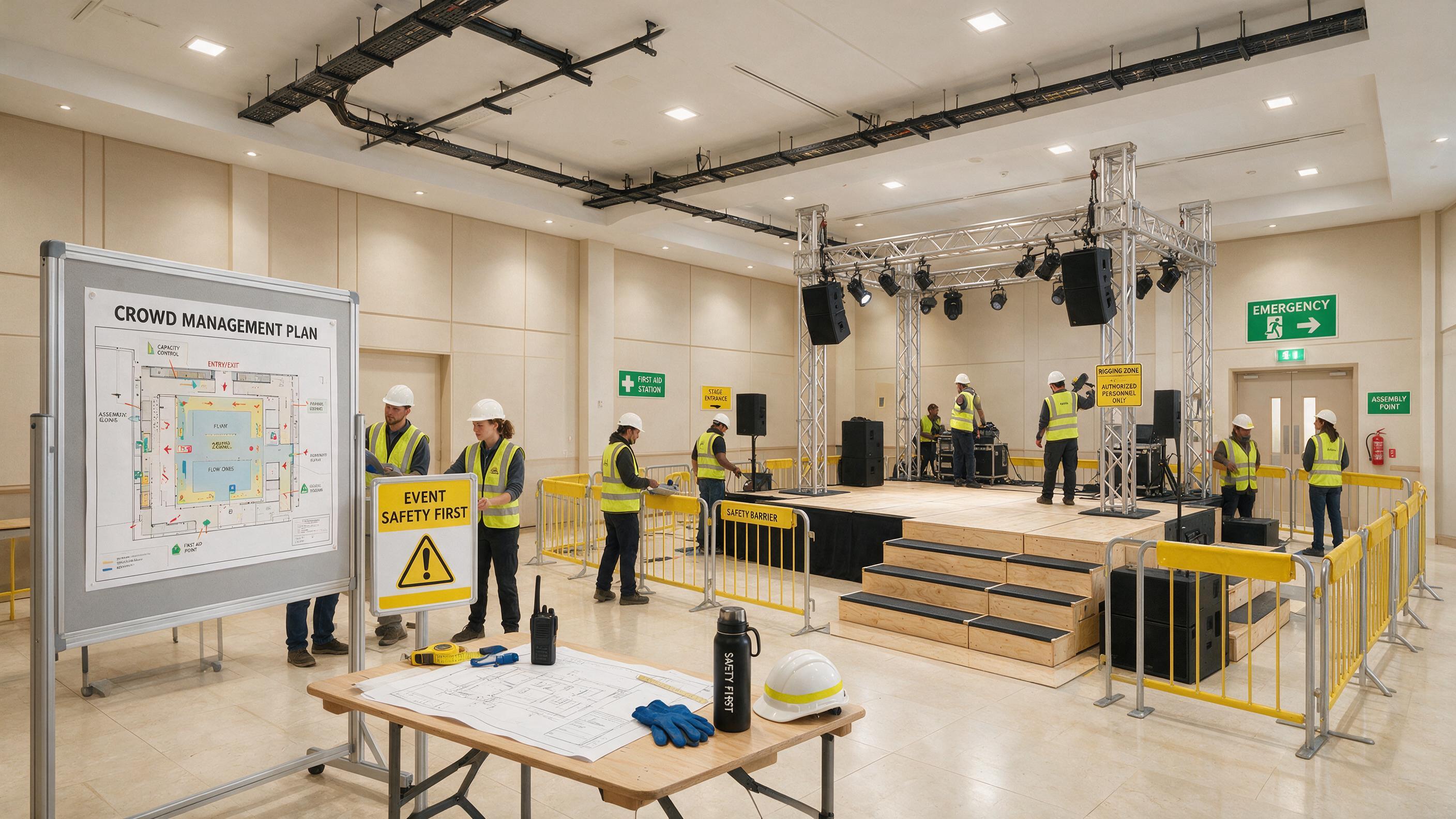
Learning Principles Aligned with bizSAFE
Singapore’s bizSAFE programme helps organizations strengthen their workplace safety and health capabilities. Familiarizing students with similar risk-management principles allows them to understand how hazards are identified, risks are evaluated, and controls are implemented before work begins - whether in a lab or at an event site.
Although academic learning does not provide formal bizSAFE recognition, it can give future employees a valuable foundation for participating in an organization’s risk-management system, whether they join a research facility, a hotel, an event management company, or a venue operator.
What This Preparation Means for Industry
For industry, graduates with early exposure to QEHS and risk-management principles may require less time to understand basic workplace expectations. They can be better prepared to:
Follow safe work procedures and standard operating procedures.
Interpret labels, safety data sheets, and risk assessments.
Report hazards and near-misses promptly.
Maintain reliable records and support inspections and internal audits.
This applies whether they enter laboratory-based roles or hospitality, events, and venue operations. This does not replace workplace-specific training, but it provides employers with a stronger starting point for developing competent and safety-conscious personnel.

Building Safer Workplaces Together
Preparing students ahead of employment is an important step, but workplace safety remains a shared responsibility. Educational institutions can build the foundation, while employers must provide proper induction, task-specific training, supervision, suitable equipment, and effective risk controls.
Stronger cooperation between tertiary institutions and industry—across laboratories, hospitality, and event sectors—can help ensure that education remains relevant to actual workplace conditions.
QuESH Consultants can support research facilities, laboratories, hotels, event organizers, and venue operators with:
Risk assessments and safe work procedures.
QEHS documentation and training.
Internal audits, bizSAFE preparation, and ISO management-system such as ISO 45001, ISO 20121 Event Sustainability Management System.
Source: Republic Poly https://www.rp.edu.sg/education/modules/