An ISO audit does not have to feel like an interrogation. It is an evidence-based check of whether your organization follows the requirements that apply to its management system and whether its processes work as intended. Auditors examine everyday work, speak with employees and review relevant records.
ISO 9001 focuses on quality and customer requirements. ISO 14001 addresses environmental management, while ISO 45001 covers occupational health and safety. Every department within the audit scope contributes through its own responsibilities.
Sales finds out what the customer needs and shares this with the other teams. Purchasing buys the supplies needed, while Operations makes the product or delivers the service. Customer Service collects feedback to check whether the customer’s needs were met. During an audit, the auditor may follow these steps to see how the teams work together.
Employees do not need to memorize the standards. They should understand their role, explain how work is controlled and show evidence of what actually happens.
Five Things To Be Ready To Explain
1. Your process. What you do, who is responsible and how work moves between teams.
2. Risks and controls. What could go wrong and how you prevent or reduce the impact.
3. Skills and awareness. How you know you are competent and understand your responsibilities. Training attendance alone may not show competence; practical demonstrations or assessments can help.
4. Evidence and results. What records, observations or measurements show that the process works.
5. Improvement. How problems are addressed and actions checked to reduce recurrence.
Five Audit Questions For Each Department
The following are sample questions, not a fixed audit script. Use those relevant to your standards, activities and responsibilities. Evidence examples are illustrative; auditors may also verify processes by observing work. Be ready for follow-up questions such as 'Can you show me?'; your explanation should match the work and available evidence.
Company process / Department
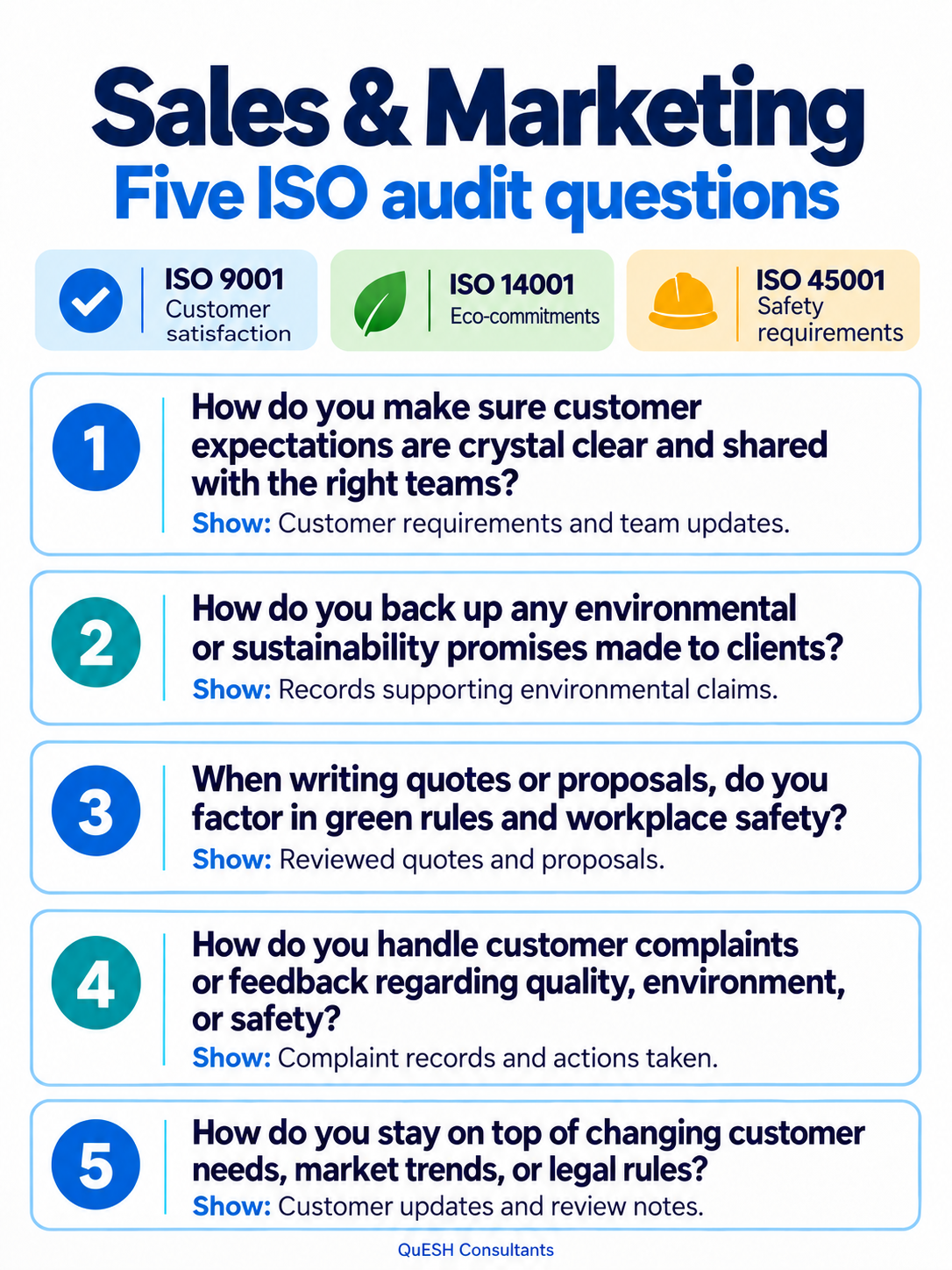
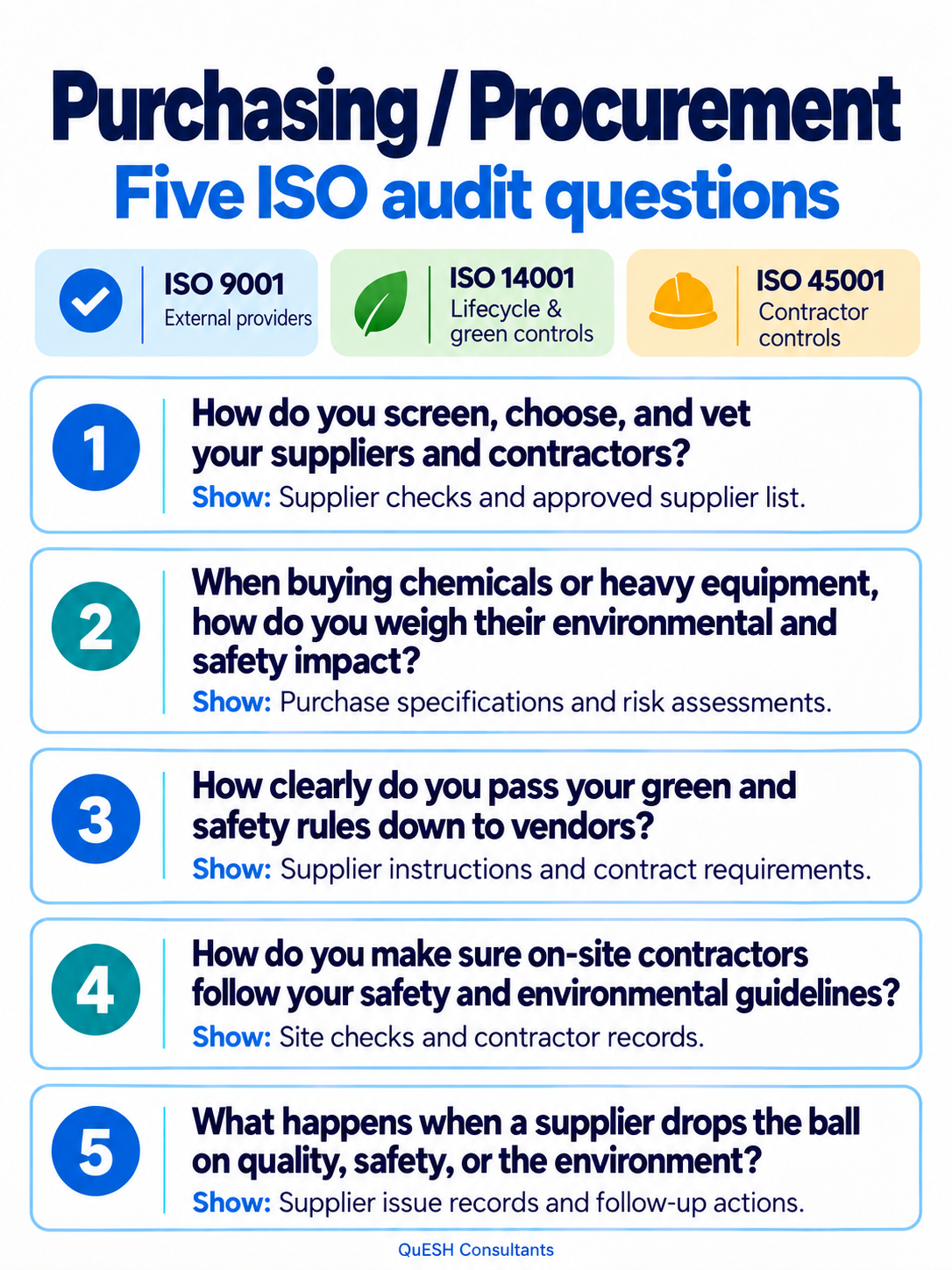
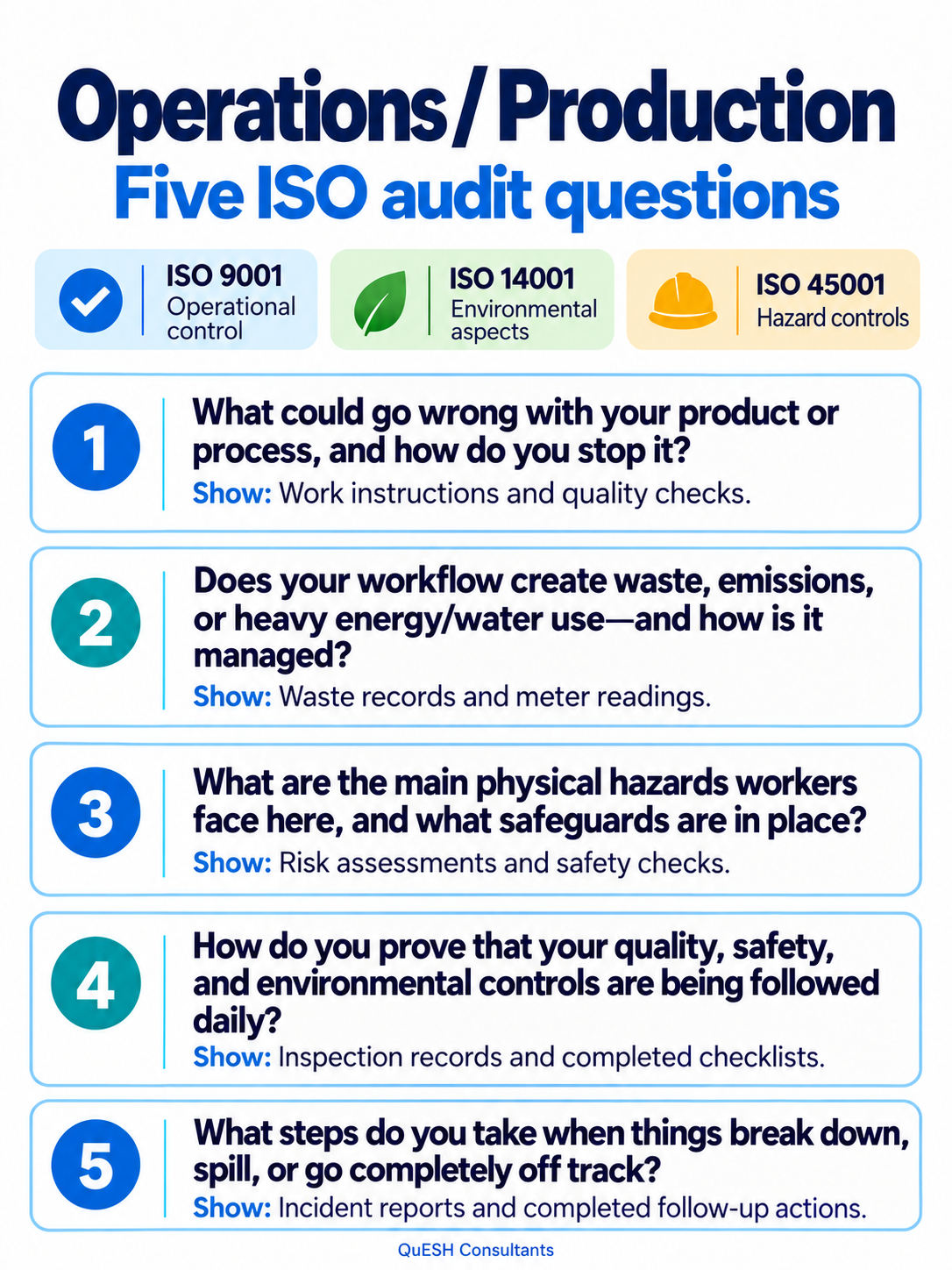
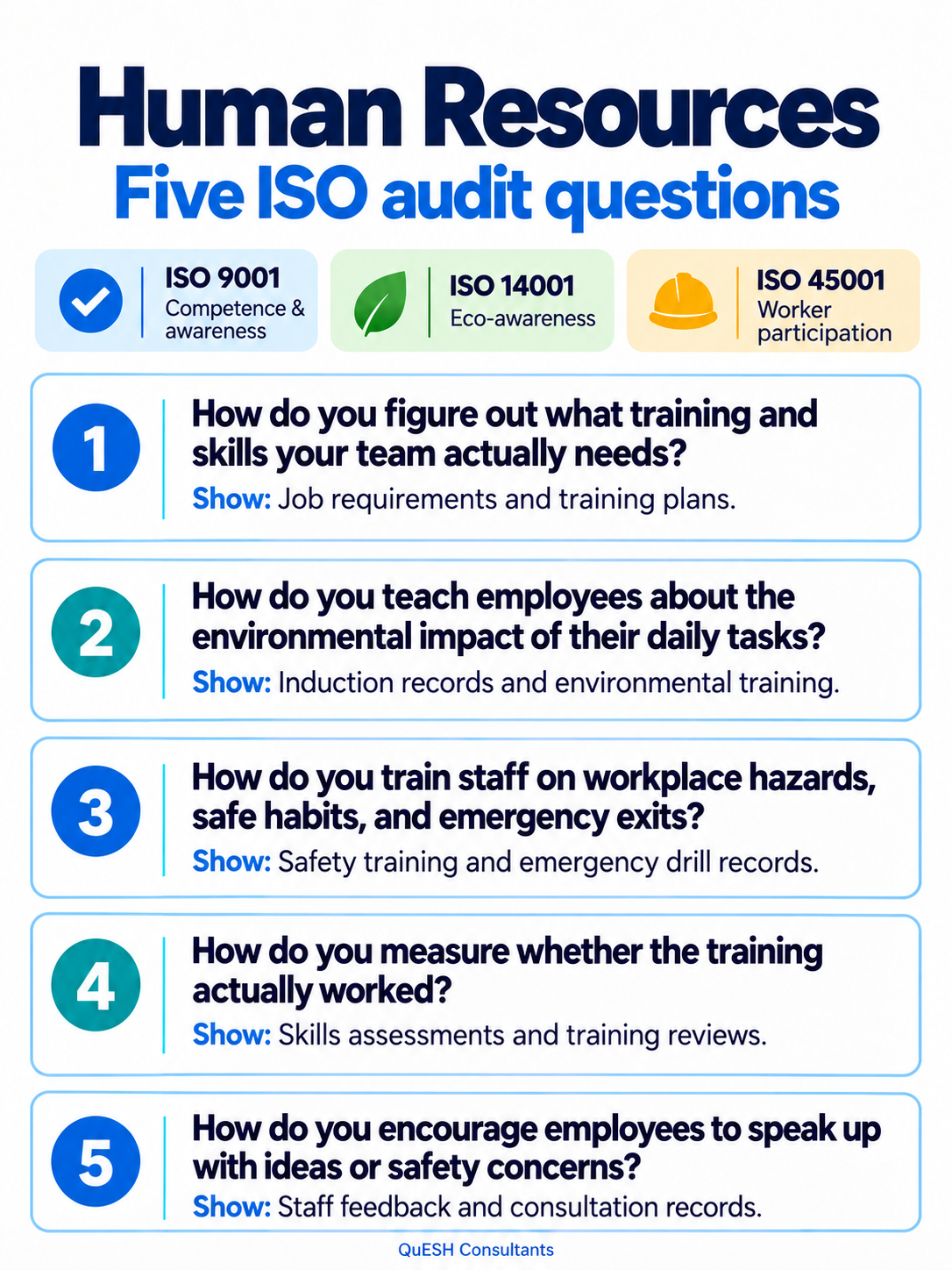
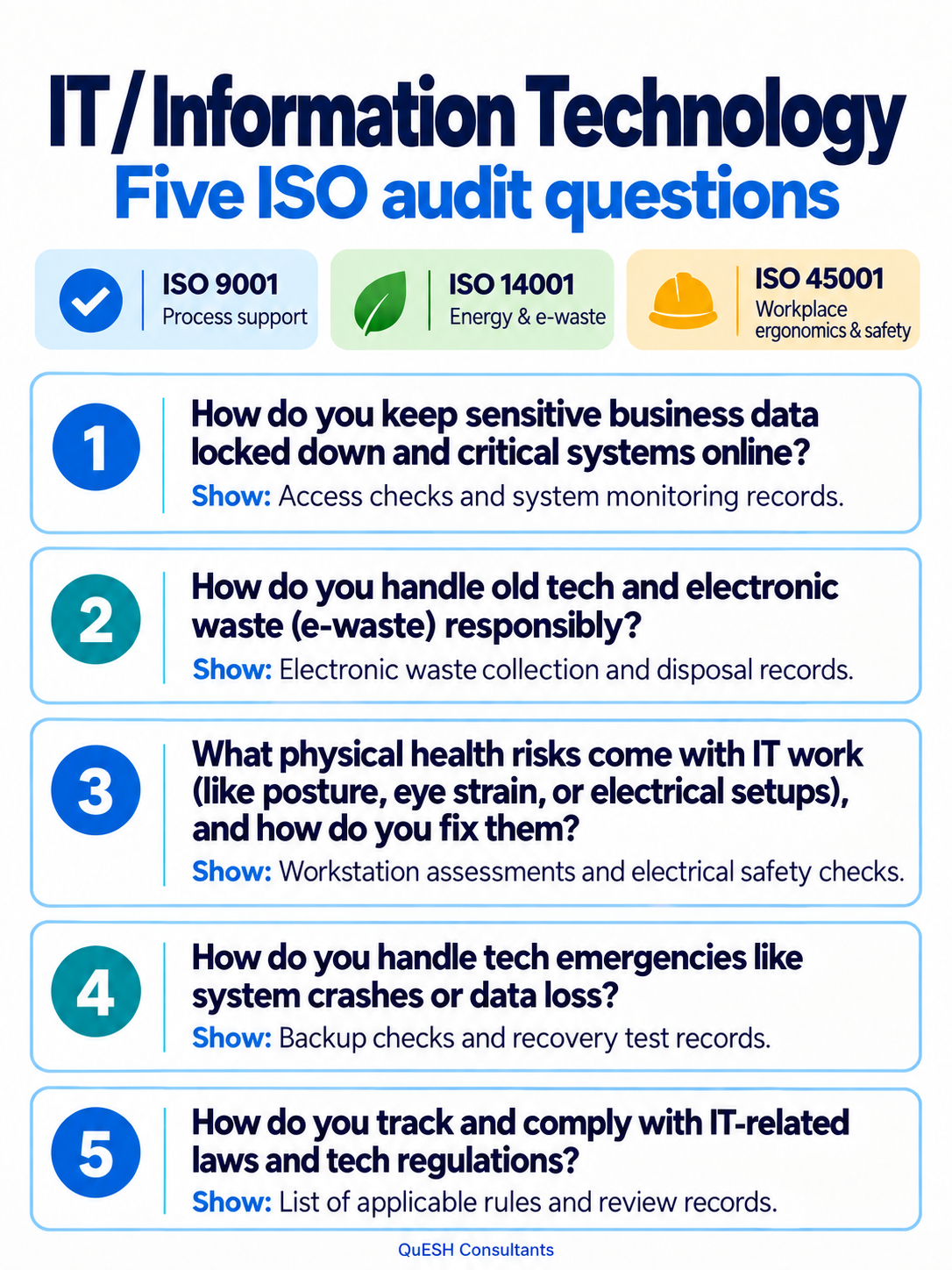
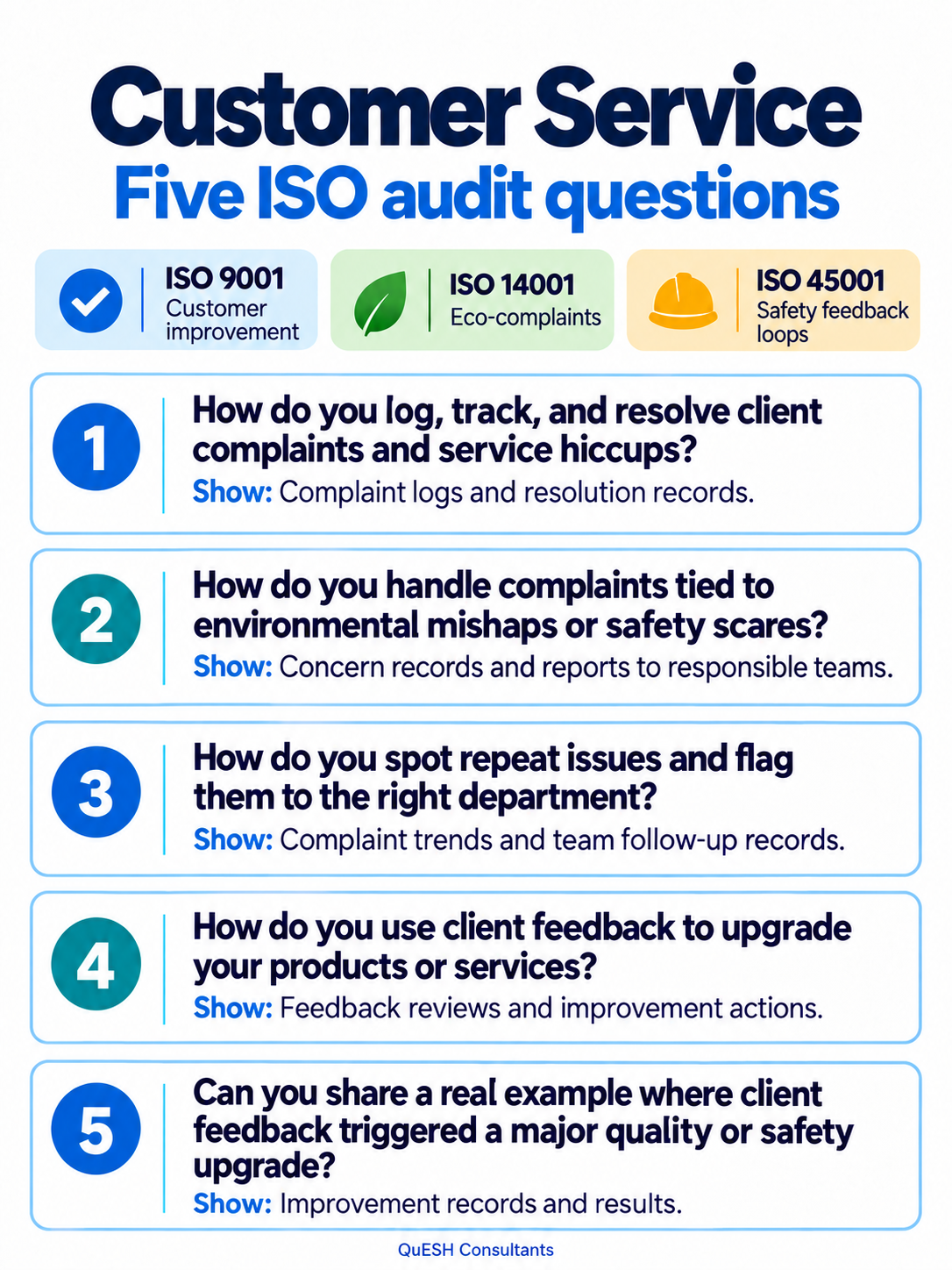
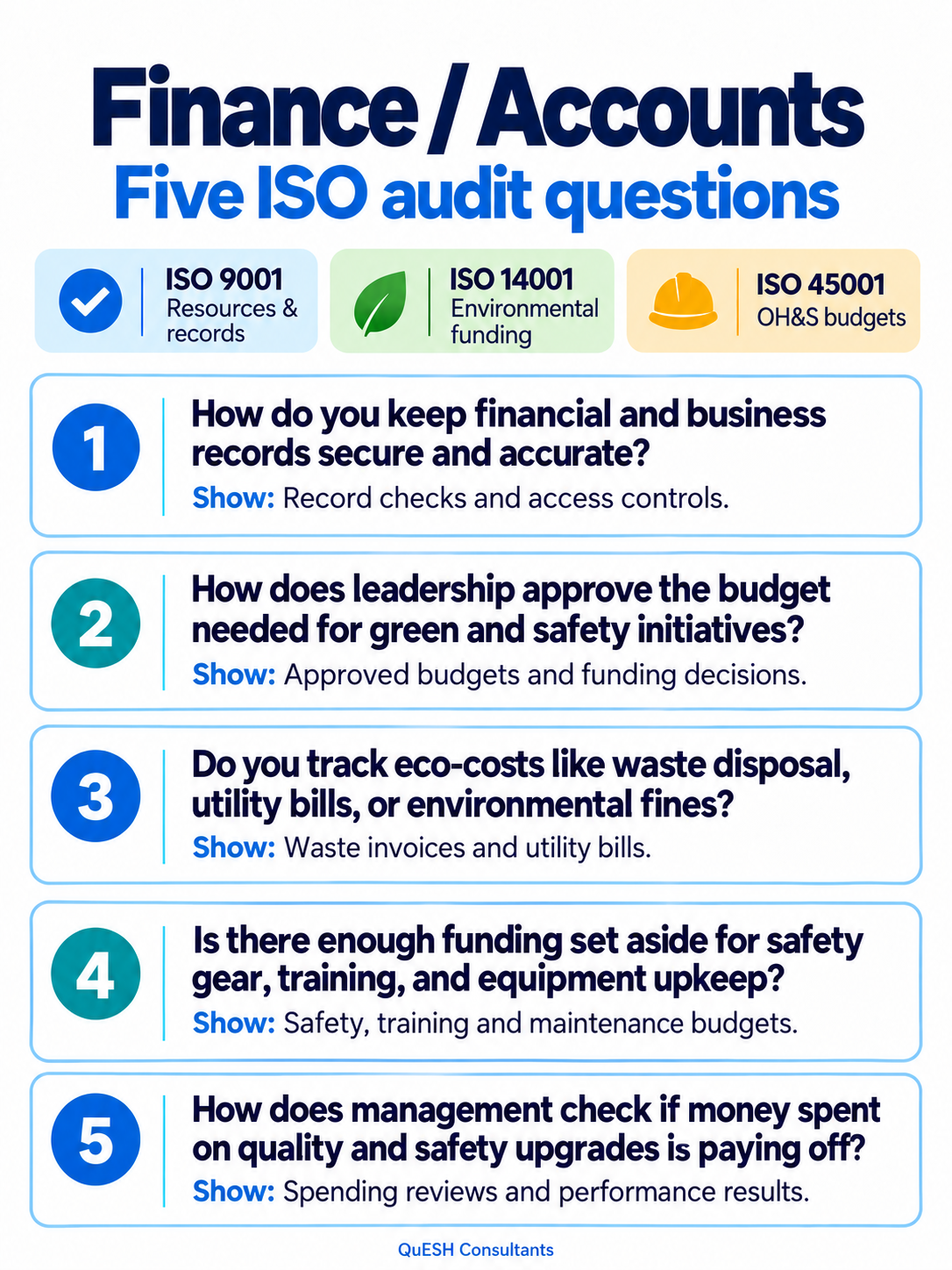
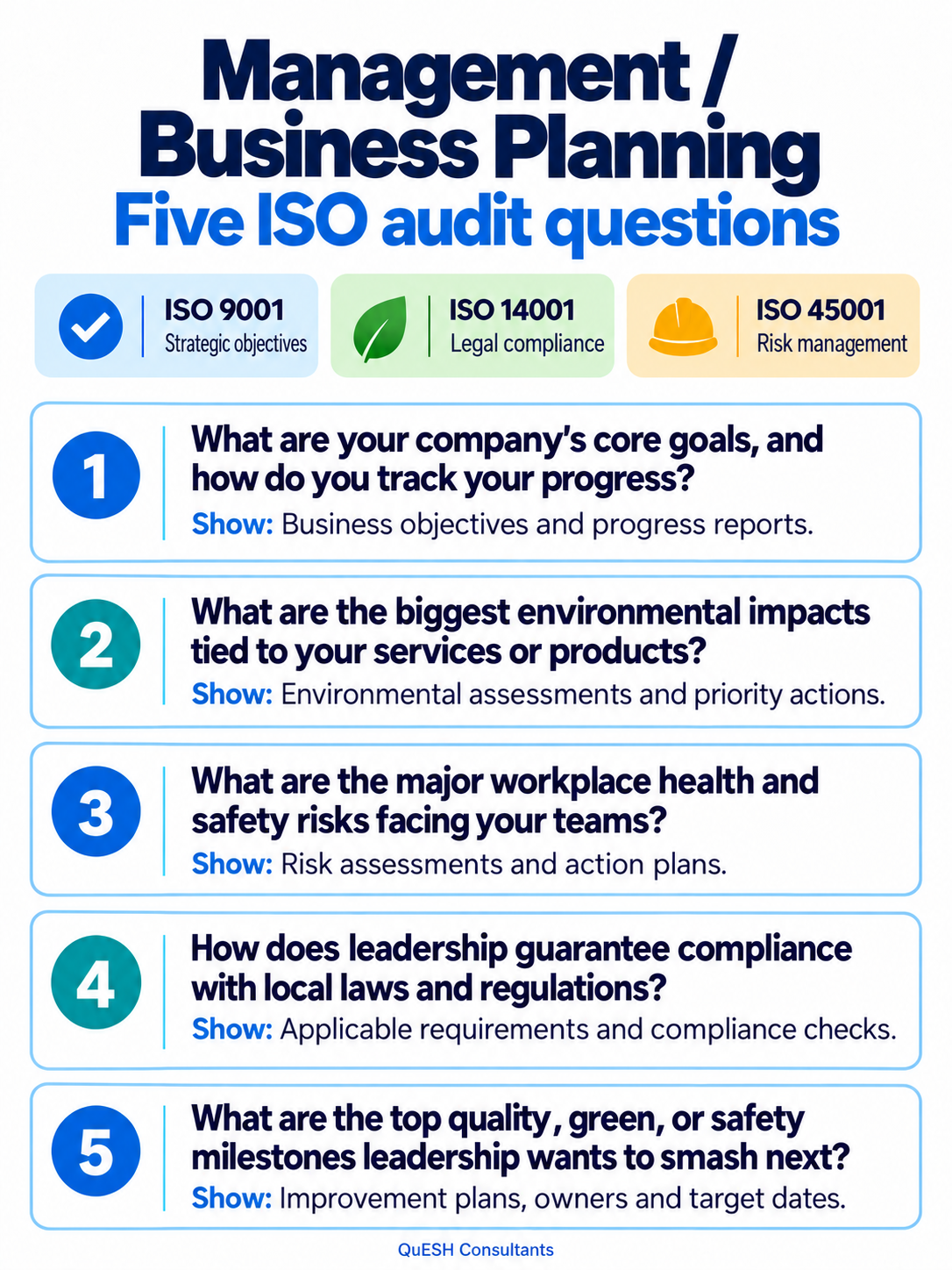
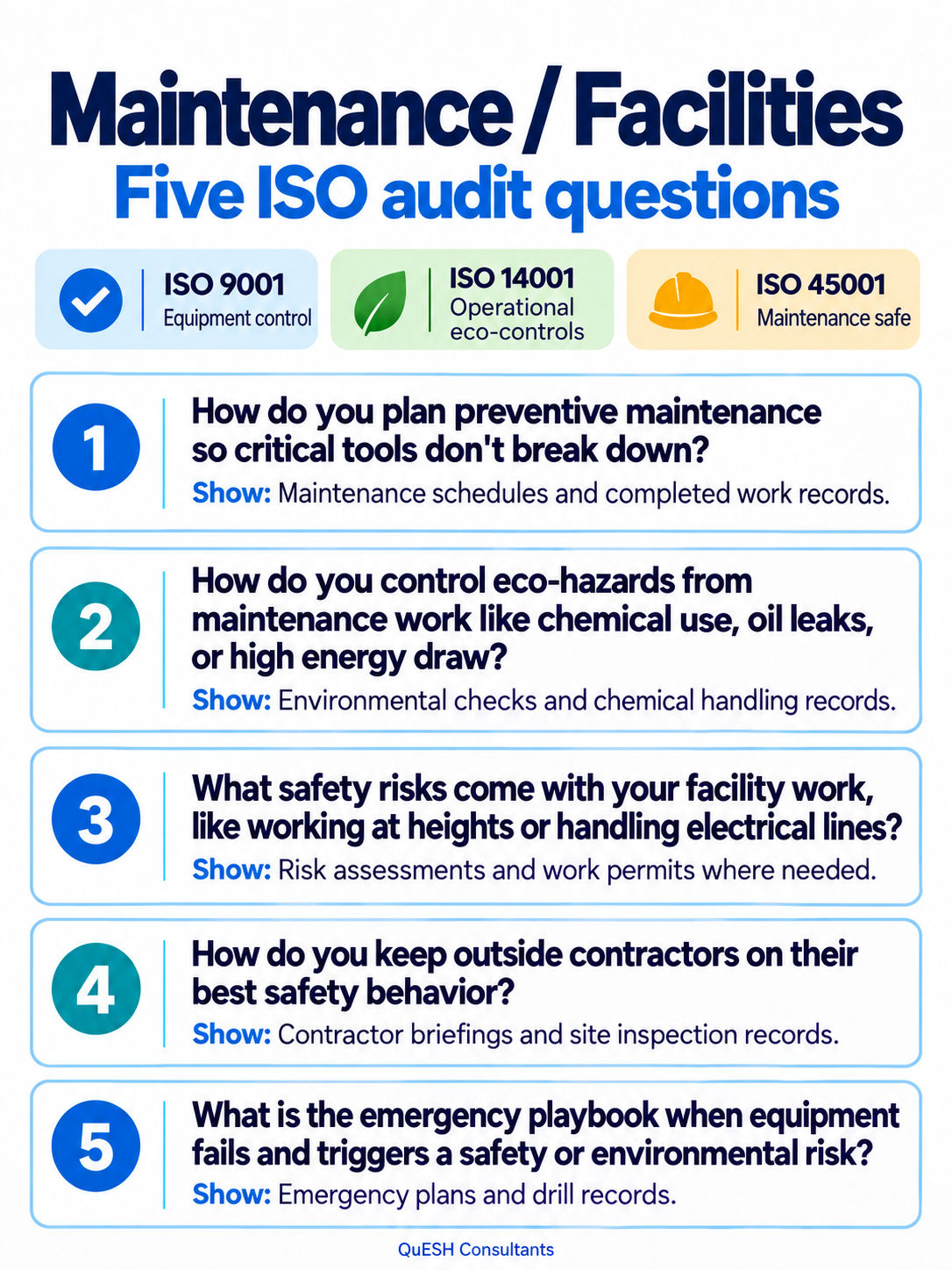
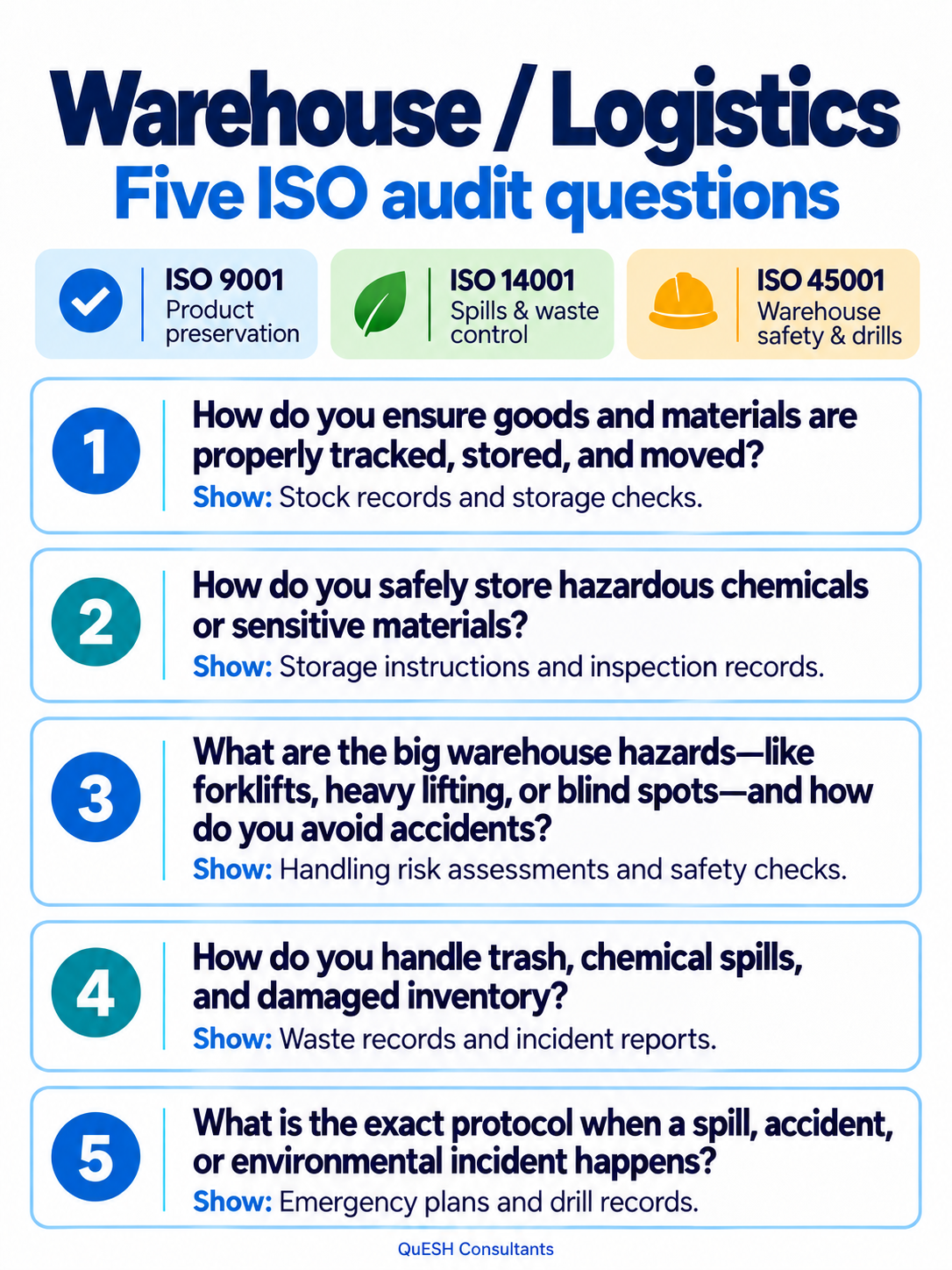
Prepare Using A Real Example
Before the audit, walk through a recent job, purchase, delivery or complaint. Explain what happened, show the relevant evidence and describe how any issue was handled. For example, a supplier review is more useful when you can explain the decision and show the assessment behind it.
If you do not know an answer, say so and locate the appropriate person or record. Be candid about gaps and explain what is being done to address them. The aim is a clear, accurate account of the work.
Need Help Preparing For Your ISO Audit?
Whether your organization uses ISO 9001, ISO 14001, ISO 45001 or a combined system, contact QuESH Consultants for a complimentary 15-minute discussion about your audit preparation needs and the support available for your organization.